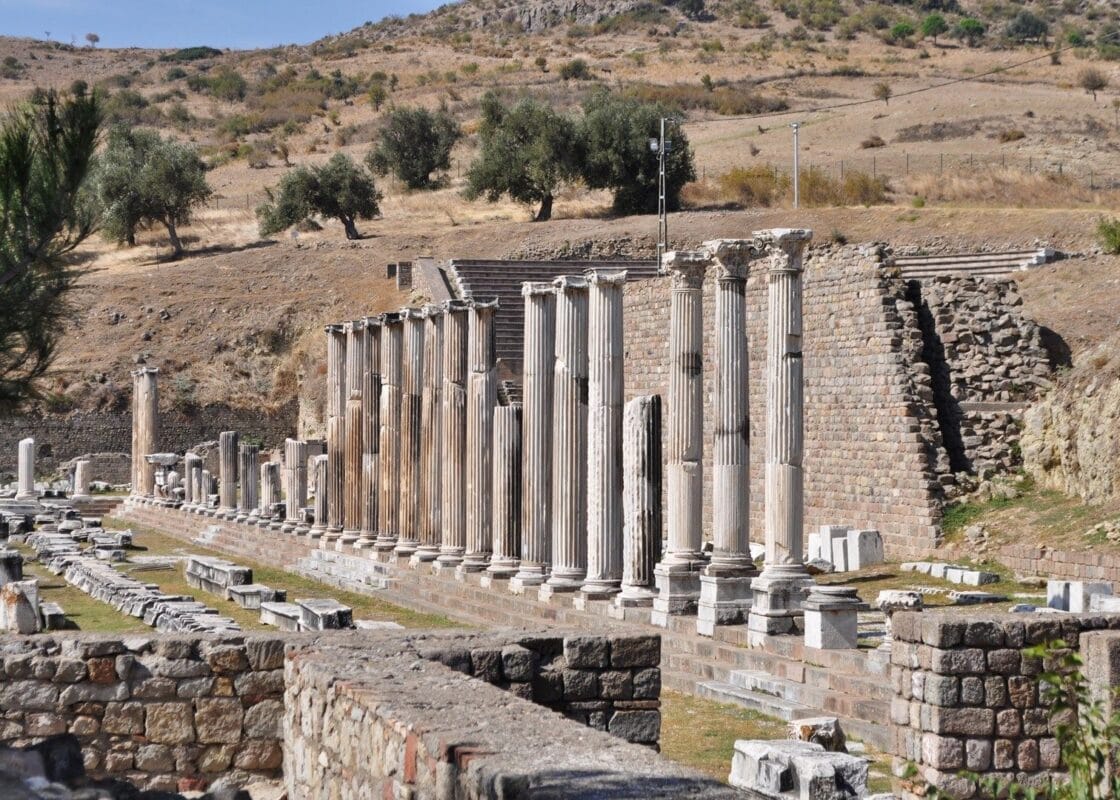
The Prytaneion was the town hall of Ephesus, where the city’s sacred flame was kept burning eternally. It was the administrative heart of the city and a place where official guests were hosted. Two of the famous Artemis statues were discovered here, highlighting the deep connection between the city’s governance and its patron goddess.
Category Archives: Ancient Landmarks
The Fountain of Trajan was one of the most imposing monuments in Ephesus, built in the early 2nd century to honor Emperor Trajan. Originally two stories high, it featured a massive statue of the Emperor with a globe under his foot, symbolizing his rule over the world. Today, the restored facade gives visitors a sense […]
The Arcadian Way was the grandest street in Ephesus, stretching from the Great Theater to the ancient harbor. Lined with marble columns and once illuminated by street lamps at night, it was the first sight for visitors arriving by sea. Walking this path today allows you to follow in the footsteps of emperors and merchants […]
The Odeon was a small, semi-circular theater used for government meetings and musical performances. Unlike the Great Theater, it was likely covered by a wooden roof to protect the city’s elite from the elements. Today, its well-preserved stone seats allow visitors to imagine the political debates that shaped one of the world’s most powerful ancient […]
Known as the ‘Houses of the Rich,’ the Terrace Houses offer an intimate look at Roman domestic life. These villas are famous for their stunning floor mosaics and intricate wall frescoes that have survived for centuries. They feature advanced heating systems and private courtyards, showcasing the incredible engineering and artistic taste of the Ephesian elite.
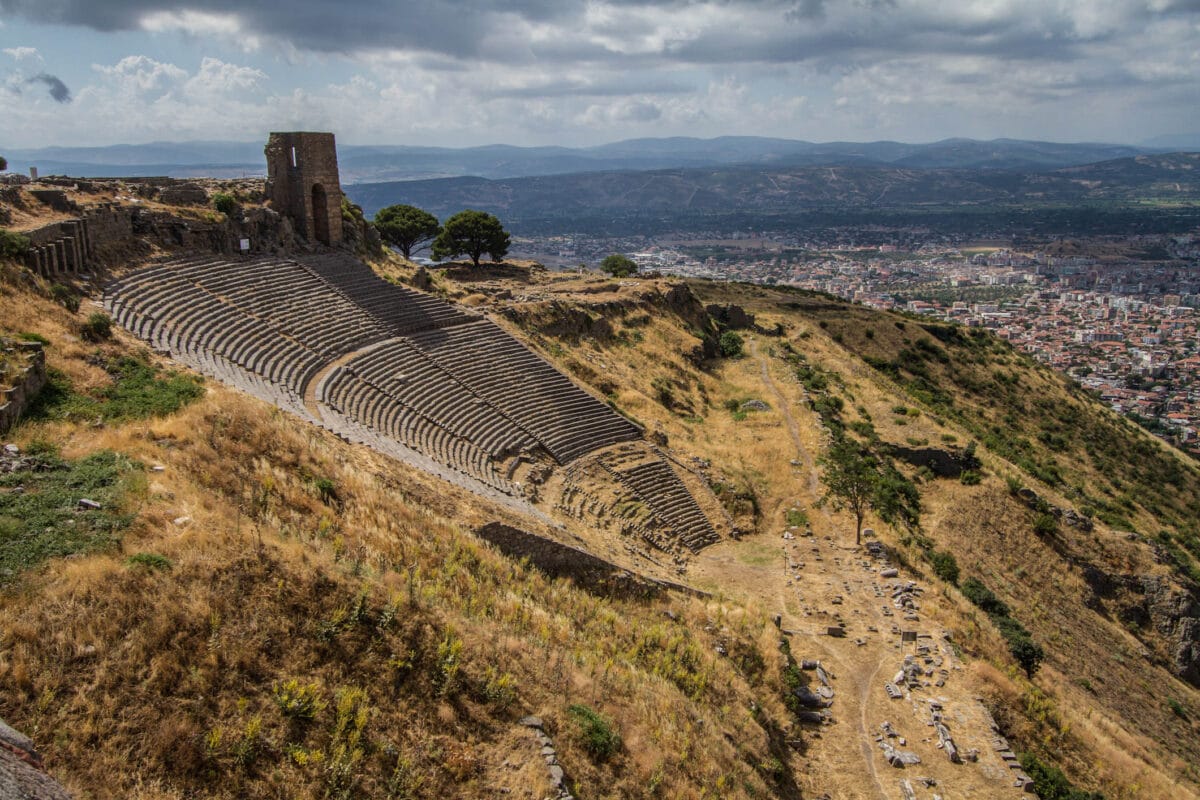
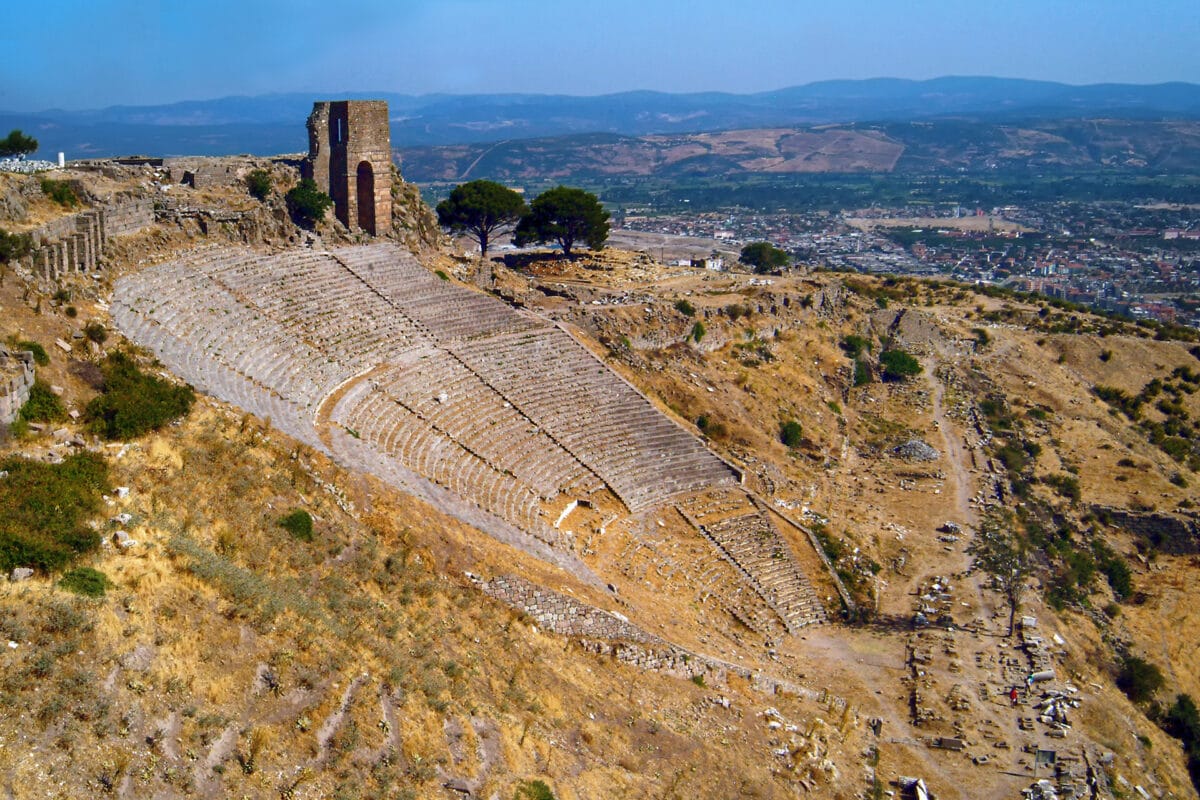
Carved into the side of Mt. Pion, the Great Theater of Ephesus is one of the largest in the ancient world. It wasn’t just for plays; it hosted gladiator fights, political gatherings, and the famous sermons of St. Paul. Standing at the top row offers a breathtaking view of the Arcadian Way leading toward the […]
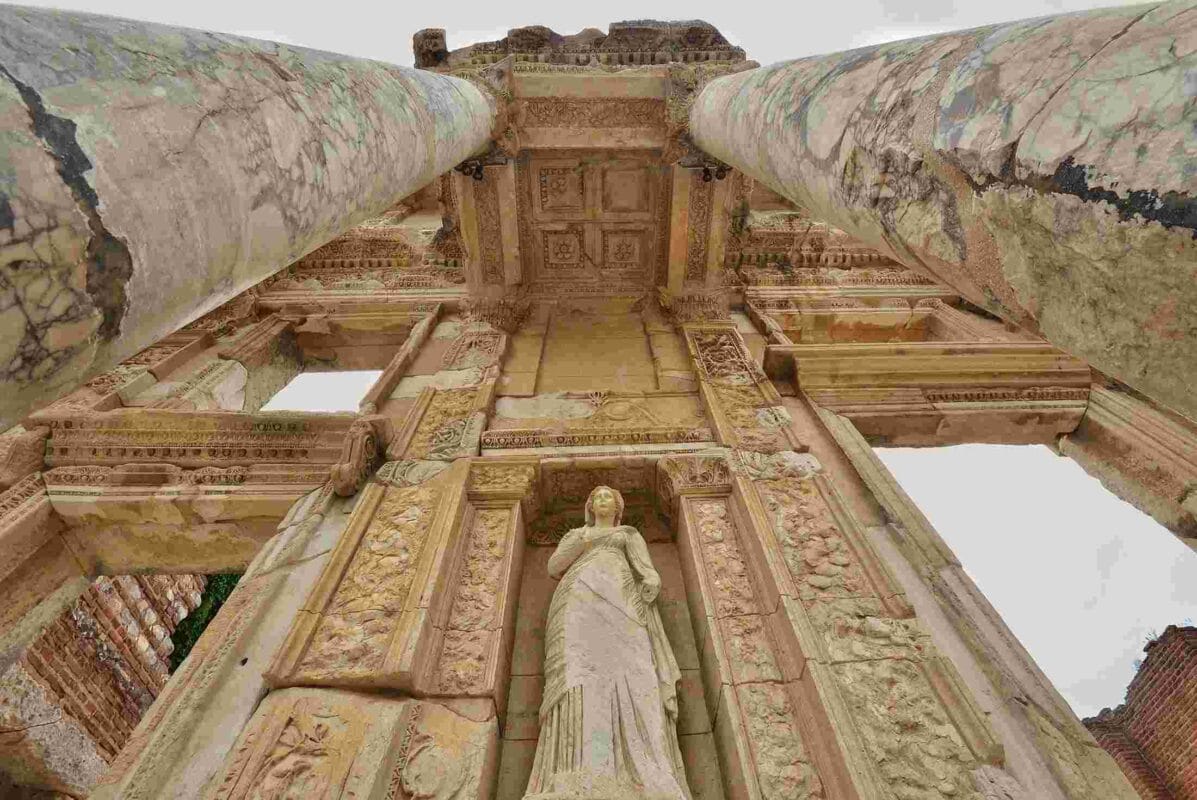
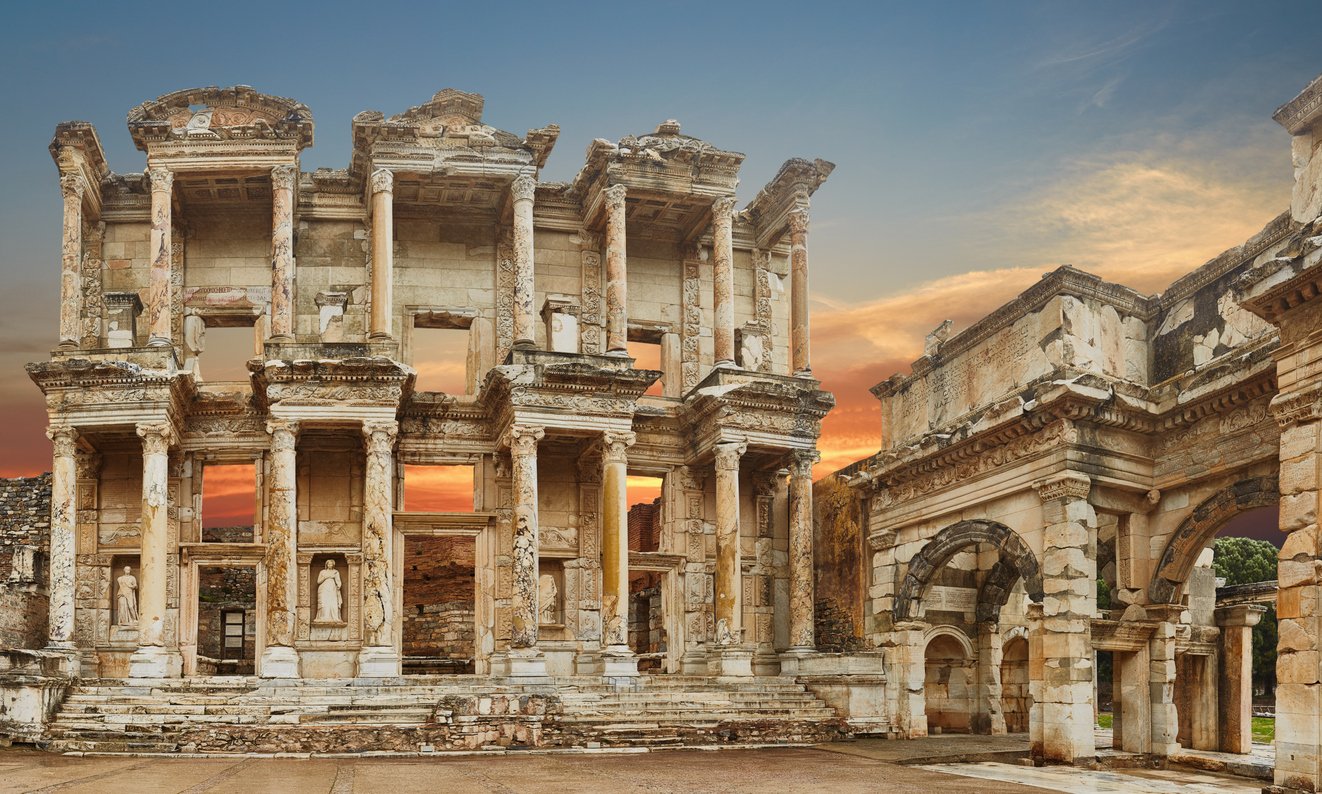
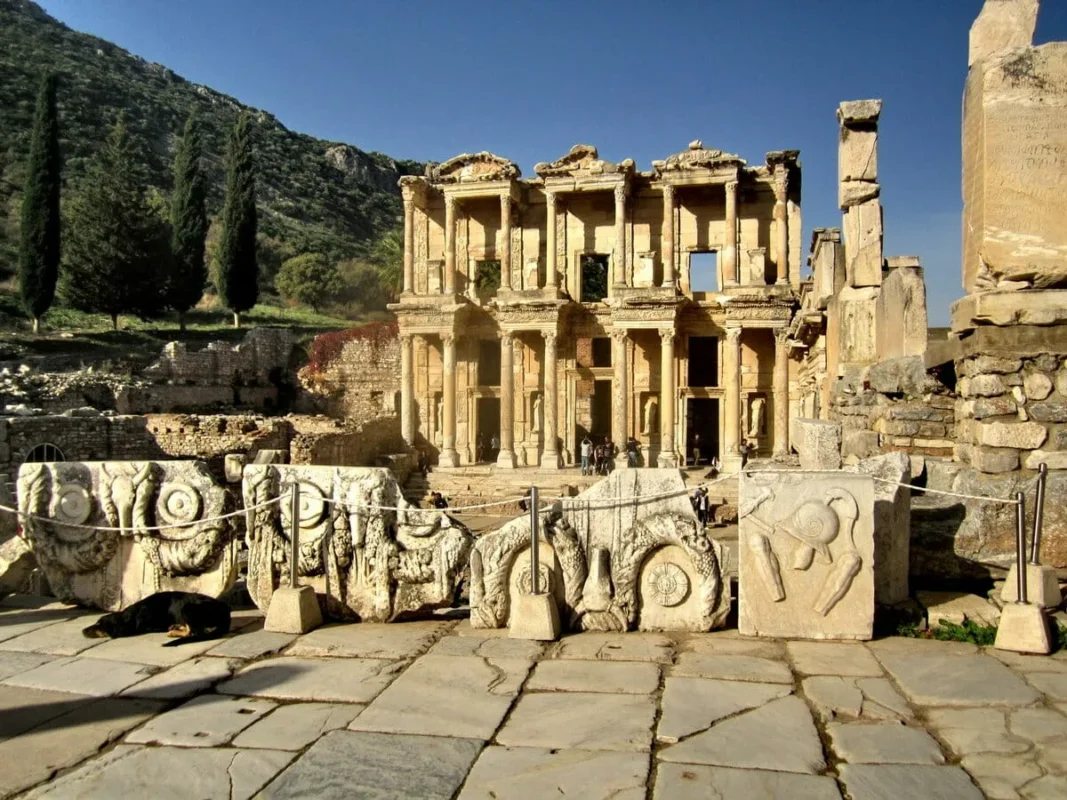
The facade of the Celsus Library is perhaps the most iconic image of Ephesus. Built in 110 AD, it once housed over 12,000 scrolls. The four statues at the entrance represent Wisdom (Sophia), Knowledge (Episteme), Intelligence (Ennoia), and Virtue (Arete)—the core values of the ancient world.
Once a colossal structure with 127 columns, the Temple of Artemis was the pride of the ancient world. Today, a single column stands as a silent witness to its former glory. Located in the fertile plains of Selçuk, it remains a must-visit for those seeking to touch the ‘Seven Wonders of the Ancient World’.
- 1
- 2