The Terrace Houses of Ephesus, also known as ‘The Houses of the Rich,’ provide an incredible glimpse into the luxurious lives of the city’s elite during the Roman period. Located on the slopes of Bulbul Mountain, these villas are famous for their remarkably preserved mosaics, colorful frescoes, and advanced underfloor heating systems. Exploring these structures […]
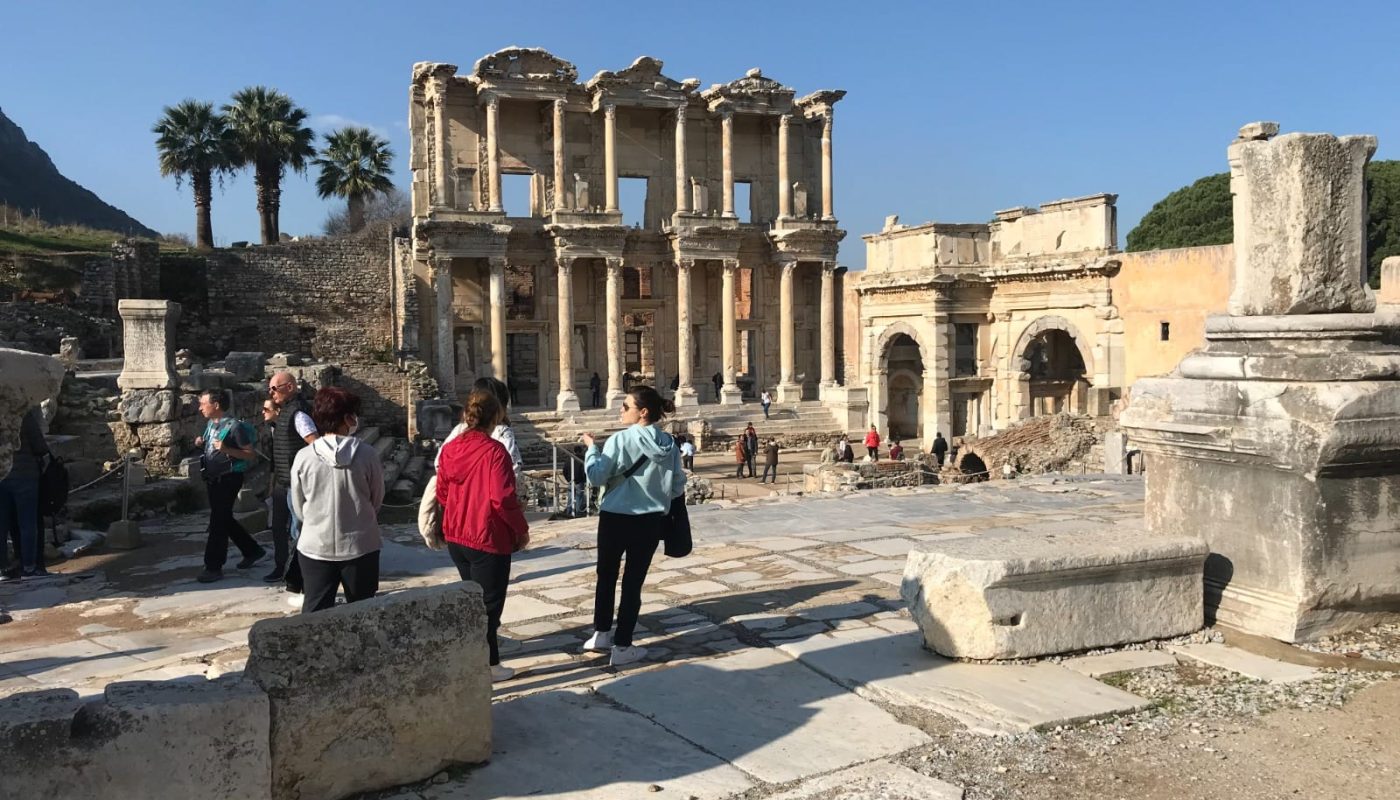
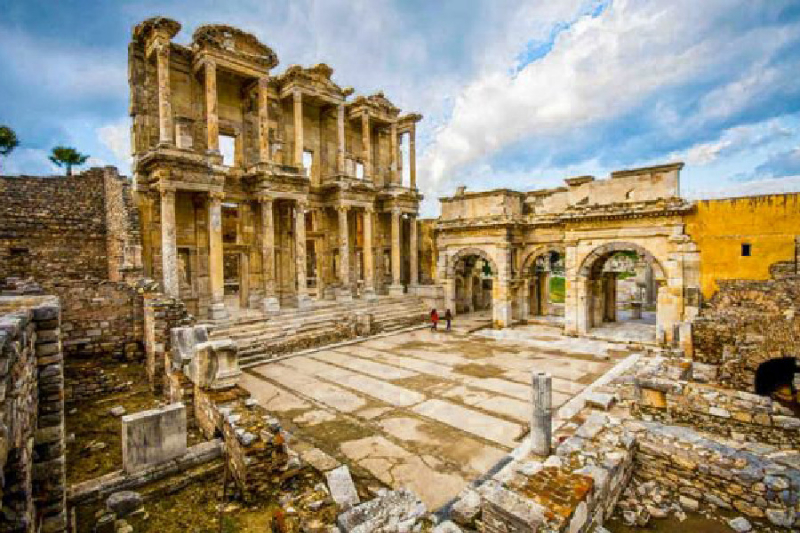
Ephesus, once a thriving Greek city and later a major Roman provincial capital, offers a unique window into ancient life. Beyond the famous Celsus Library, visitors can explore the vast Great Theatre, the intricate Terrace Houses, and the spiritual House of the Virgin Mary. Each stone tells a story of commerce, philosophy, and imperial power […]
The Wonders of Ephesus: A Glimpse into Ancient Civilization Unforgettable Ephesus Tours The ancient city of Ephesus, located in present-day Turkey, stands as a testament to the grandeur of civilization during the Roman Empire. Once a bustling metropolis, Ephesus was renowned for its impressive architecture, vibrant trade, and rich culture. Today, it remains one of […]
The Prytaneion was the town hall of Ephesus, where the sacred flame of Hestia was kept burning perpetually. It was the administrative heart of the city, where high-ranking officials (Prytaneis) met and hosted foreign dignitaries. Two famous statues of Artemis, now in the Ephesus Museum, were discovered within its ruins. Primary Focus Keyword: The Prytaneion: […]
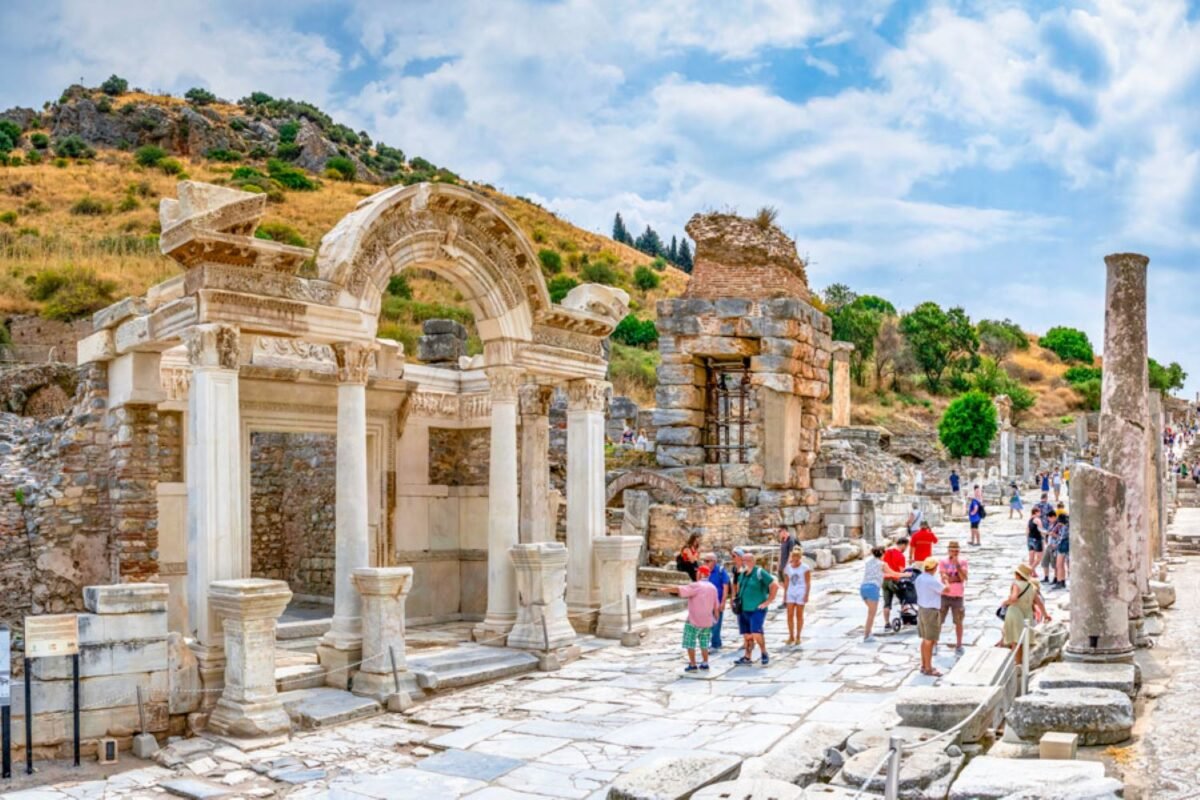
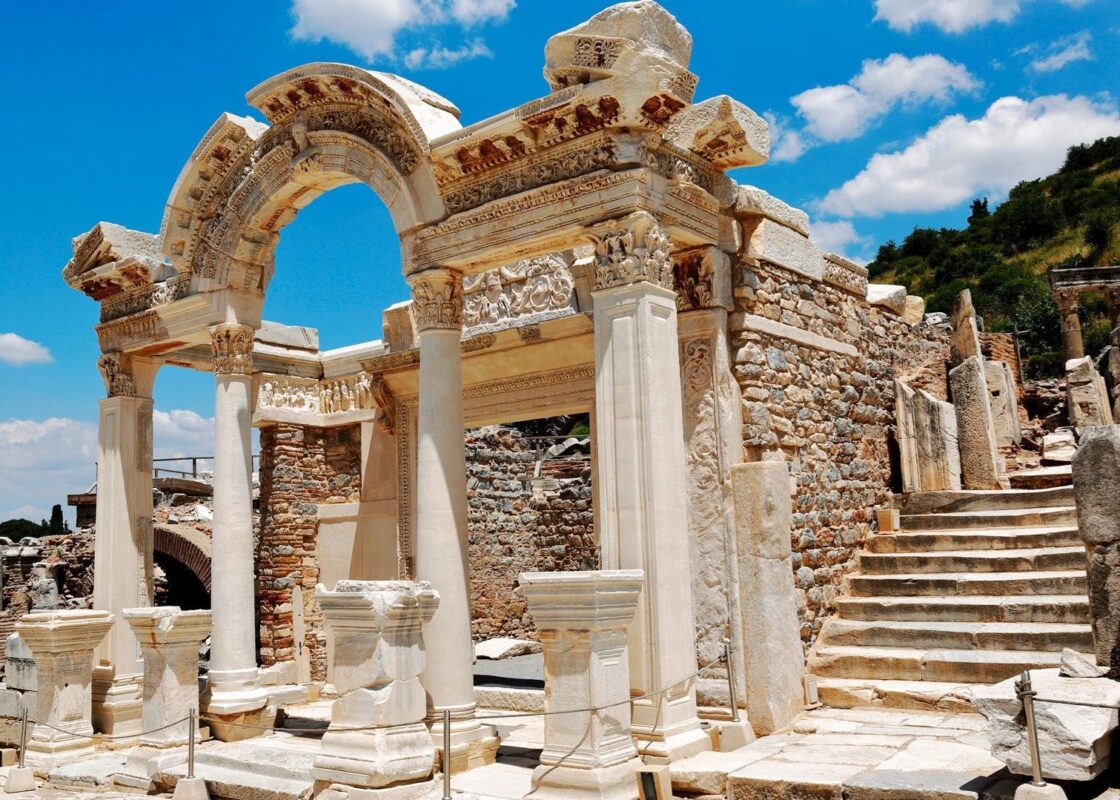
The Temple of Hadrian is one of the most beautiful and well-preserved structures on Curetes Street. Built in the 2nd century AD to honor Emperor Hadrian, its facade features a stunning arch with a relief of Tyche, the goddess of victory. The intricate carvings of mythological scenes and floral patterns make it a masterpiece of […]
The Fountain of Trajan is one of the most magnificent monuments in Ephesus, built in the early 2nd century AD to honor Emperor Trajan. Originally a two-story structure, it featured a giant statue of the Emperor, from whose feet water once flowed into a large pool. Today, its restored facade remains a striking example of […]
The Gate of Hercules stands at the upper end of Curetes Street, serving as a symbolic barrier that narrowed the road to prevent chariots from entering the pedestrian-only zone. The gate is famous for its two massive pillars featuring reliefs of Hercules wrapped in the skin of the Nemean Lion, representing strength and protection. Primary […]
The Varius Baths, located near the State Agora, were built in the Hellenistic period and expanded during Roman times. These baths served as a social hub where citizens would gather to relax, exercise, and discuss daily affairs. The sophisticated heating system (hypocaust) visible today showcases the advanced engineering of the era. Primary Focus Keyword: The […]
The Odeon, also known as the Small Theatre, was a semi-circular structure used for both musical performances and meetings of the city council (Boule). Built in the 2nd century AD by Publius Vedius Antoninus, it could accommodate around 1,500 people. Unlike the Great Theatre, it was originally covered with a wooden roof to provide acoustics […]
The Domitian Square is home to the first temple in Ephesus dedicated to a Roman Emperor. The Temple of Domitian was a massive structure that demonstrated the city’s loyalty to Rome. Today, the square is a fascinating area where visitors can see the remains of the temple’s foundations and the impressive Pollio Fountain nearby.