The Prytaneion was the town hall of Ephesus, where the city’s sacred flame was kept burning eternally. It was the administrative heart of the city and a place where official guests were hosted. Two of the famous Artemis statues were discovered here, highlighting the deep connection between the city’s governance and its patron goddess.
The Pollio Fountain, located near the Domitian Square, was built in 97 AD by C. Sextilius Pollio. This monumental fountain was supplied by the ancient aqueducts and featured a large pool decorated with beautiful statues, including the famous ‘Odysseus and Polyphemus’ group now housed in the museum. It served as a vital water source and […]
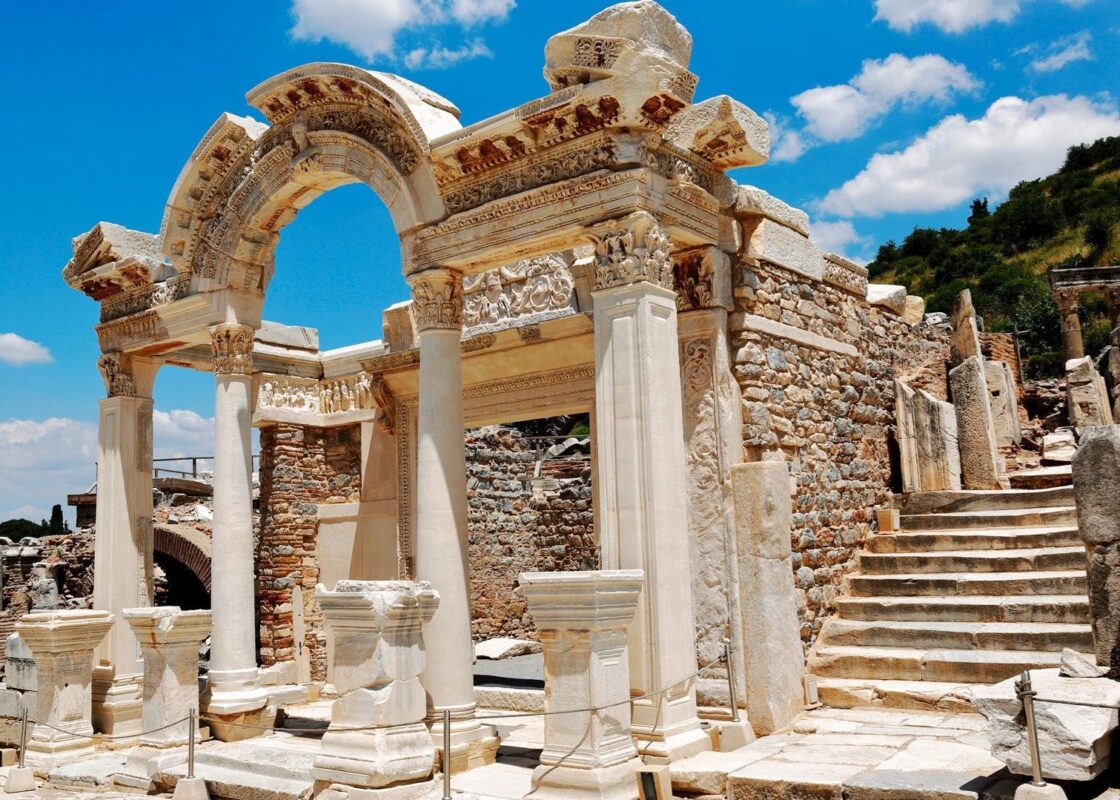
The Temple of Hadrian is one of the most beautiful and well-preserved structures on Curetes Street. Built to honor Emperor Hadrian’s visit to Ephesus, its facade features a stunning arch with a relief of Tyche, the goddess of victory. The intricate carvings of mythological scenes and floral patterns make it a favorite spot for photographers […]
The Prytaneion was the town hall of Ephesus, where the sacred flame of the city was kept burning eternally. It served as the administrative heart of the city and a place where official guests were entertained. Excavations here revealed the famous statues of Artemis, now displayed in the Selçuk Museum, highlighting the building’s religious and […]
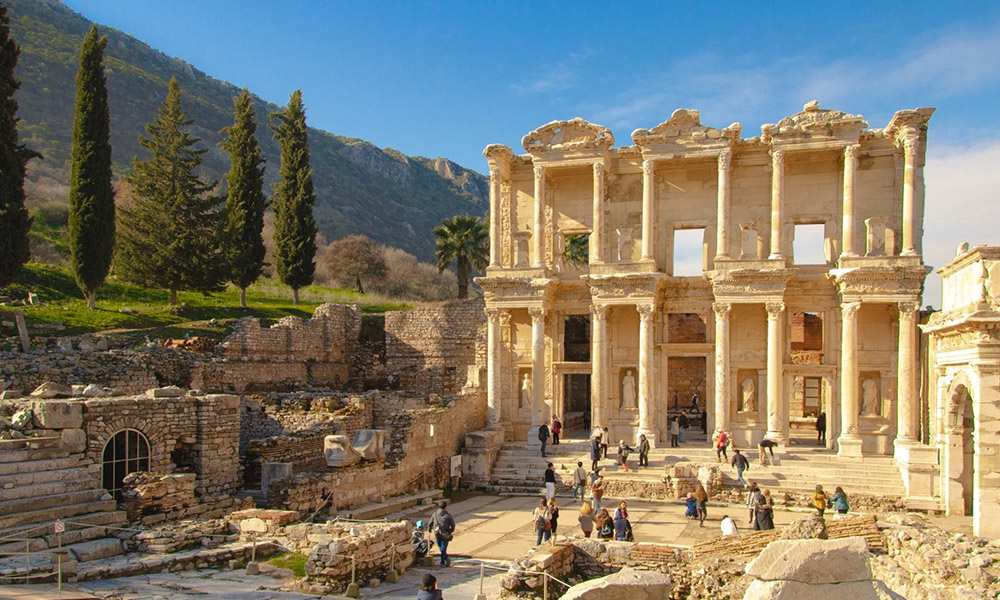
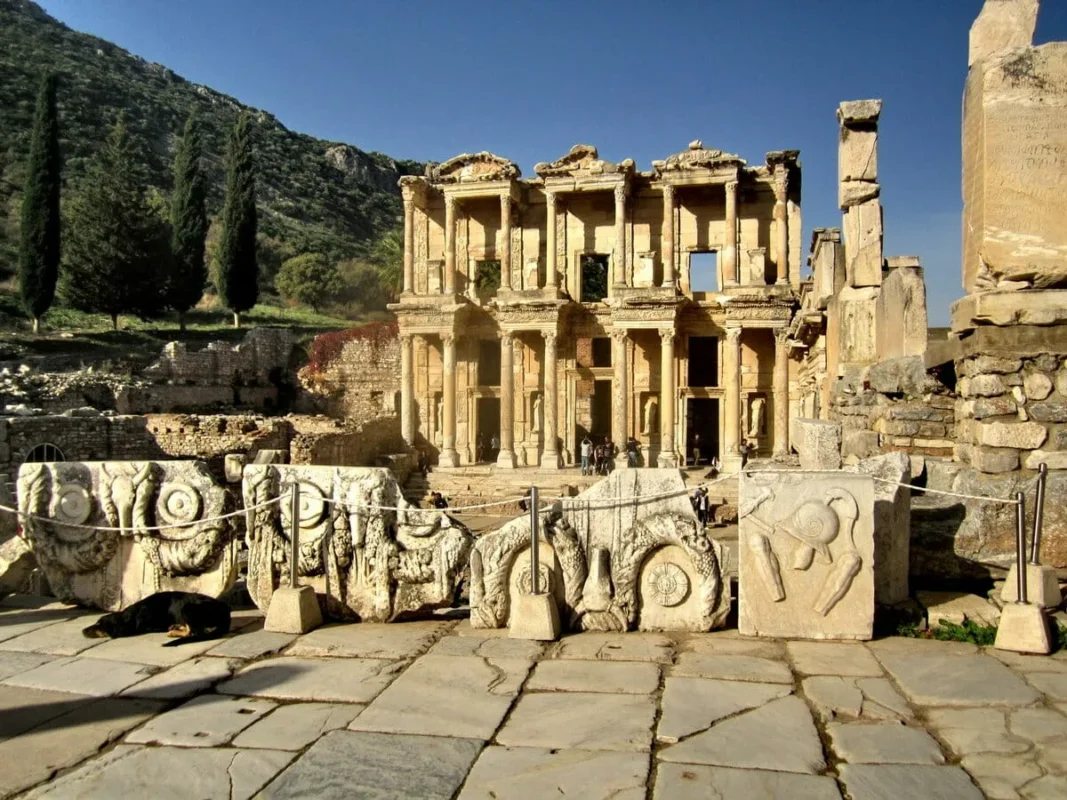
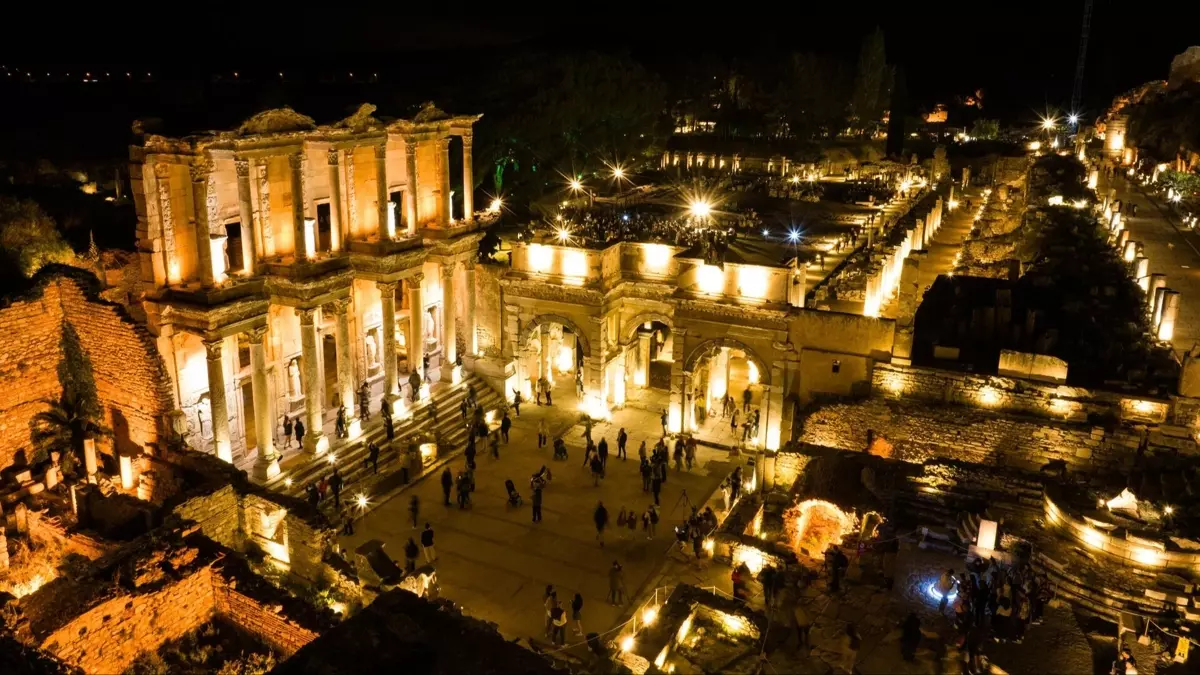
The Gate of Mazaeus and Mithridates is a monumental triple-arched gateway leading into the Commercial Agora from the Library of Celsus. Built by two freed slaves in honor of Emperor Augustus, it stands as a symbol of social mobility and gratitude in the Roman Empire. Its grand architecture perfectly complements the neighboring library, creating one […]
The Fountain of Trajan was one of the most imposing monuments in Ephesus, built in the early 2nd century to honor Emperor Trajan. Originally two stories high, it featured a massive statue of the Emperor with a globe under his foot, symbolizing his rule over the world. Today, the restored facade gives visitors a sense […]
The Arcadian Way was the grandest street in Ephesus, stretching from the Great Theater to the ancient harbor. Lined with marble columns and once illuminated by street lamps at night, it was the first sight for visitors arriving by sea. Walking this path today allows you to follow in the footsteps of emperors and merchants […]
The Grotto of the Seven Sleepers is a fascinating early Christian site located near Ephesus. According to legend, seven young men fled religious persecution and fell asleep in this cave, only to wake up 200 years later. The site features a complex of rock-cut tombs and a small church, serving as a testament to the […]
The İsa Bey Mosque is a stunning example of Seljuk architecture, built in 1375. Its asymmetrical design and use of columns from the ruins of Ephesus make it a unique historical site. Located at the foot of the Ayasuluk Hill, it remains an active place of worship and a symbol of the region’s transition from […]
The Odeon was a small, semi-circular theater used for government meetings and musical performances. Unlike the Great Theater, it was likely covered by a wooden roof to protect the city’s elite from the elements. Today, its well-preserved stone seats allow visitors to imagine the political debates that shaped one of the world’s most powerful ancient […]